
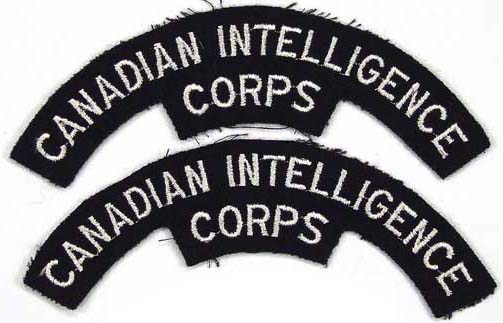
These are Canadian Intelligence Corps uniform shoulder flashes, mostly worn with battle dress and pre-1968 uniforms. Background: Although the Canadian Intelligence Corps was only officially recognized on October 29, 1942, (with consent of King George VI), many military personnel were active in intelligence by 1939. During 2WW, personnel from the “C Int C” formed part …
Author archives: The Service Battalion Senate, Inc.
Insignia, Intelligence

A Canadian Intelligence Corps green bush hat badge embroidered other ranks’ cap badge with Queen Elizabeth Crown indicating the era from 1952 to 1968 upon integration of the CF. The Intelligence Branch is a personnel branch of the Canadian Forces (CF) that is concerned with providing relevant and correct information to enable commanders to make decisions. The Intelligence Branch was …
Machine, Duplicating, Gestetner 26
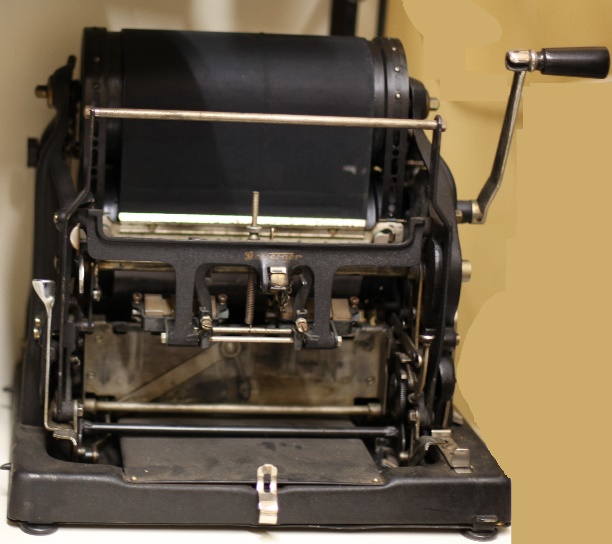
The Gestetner is a type of duplicating machine named after its inventor, David Gestetner (1854 – 1939). The Gestetner was a stencil-method duplicator that used a thin sheet of paper coated with wax, which was written upon with a special stylus that left a broken line through the stencil, removing the paper’s wax coating. Ink was forced through the stencil (originally by an ink …
Buckle, Belt, USSR
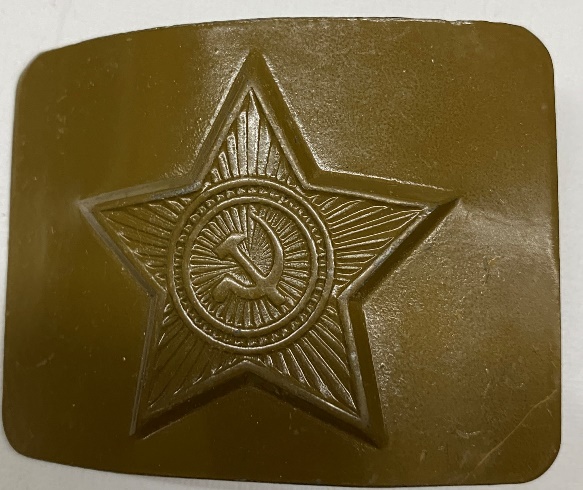
This USSR military green star belt buckle with hammer and sickle is a post-2WW belt buckle. Material: steel or galvanized steel Dimensions: 3 wide x 2 inches tall.Weight: 75 gramsManufacture: USSRType: Uniform/ ClothingConflict: Cold WarService: ArmyEra: 1945-Present Historical reference. The Worker-Peasant Red Army (RKKA) was called Soviet in February 1946. The belts of this design were …
Sisters, Nursing, Canada

Below is a Second World War Era Nursing Sister uniform with Lieutenant rank, RCAMC (Royal Canadian Army Medical Corp) buttons and belt, 1945. Military nursing had its beginnings in the Crimean War, although the tradition of alleviating the sufferings of soldiers is an old one. The organizing of battle nursing and the dispatch of women …
Hats, Open Field

The field service cap was originally designed for wear during field operations and training, it may now also be worn as an undress cap with full and undress uniforms.
Wire, Carrier

Shown is a reel used with field telephones wire. Telephones and wire were (and are) used for military communications. Field telephones operate over wire lines, often using wires strung in combat conditions with a talking range of about 8.0 kilometres (5 mi), or longer depending on the type of cable used. Soldiers laying wire in the field are trained to connect additional …
Post, Command, CSS

In operations or exercises a command post (CP) is a location from which command is exercised. CP’s have different sizes and staffing depending on the level of the organization. A CP can be in a building, vehicle, or tent in the field. Some functions of a logistics CP are: Controlling logistic operations (ops). Receiving reports …
Point, Delivery (DP)
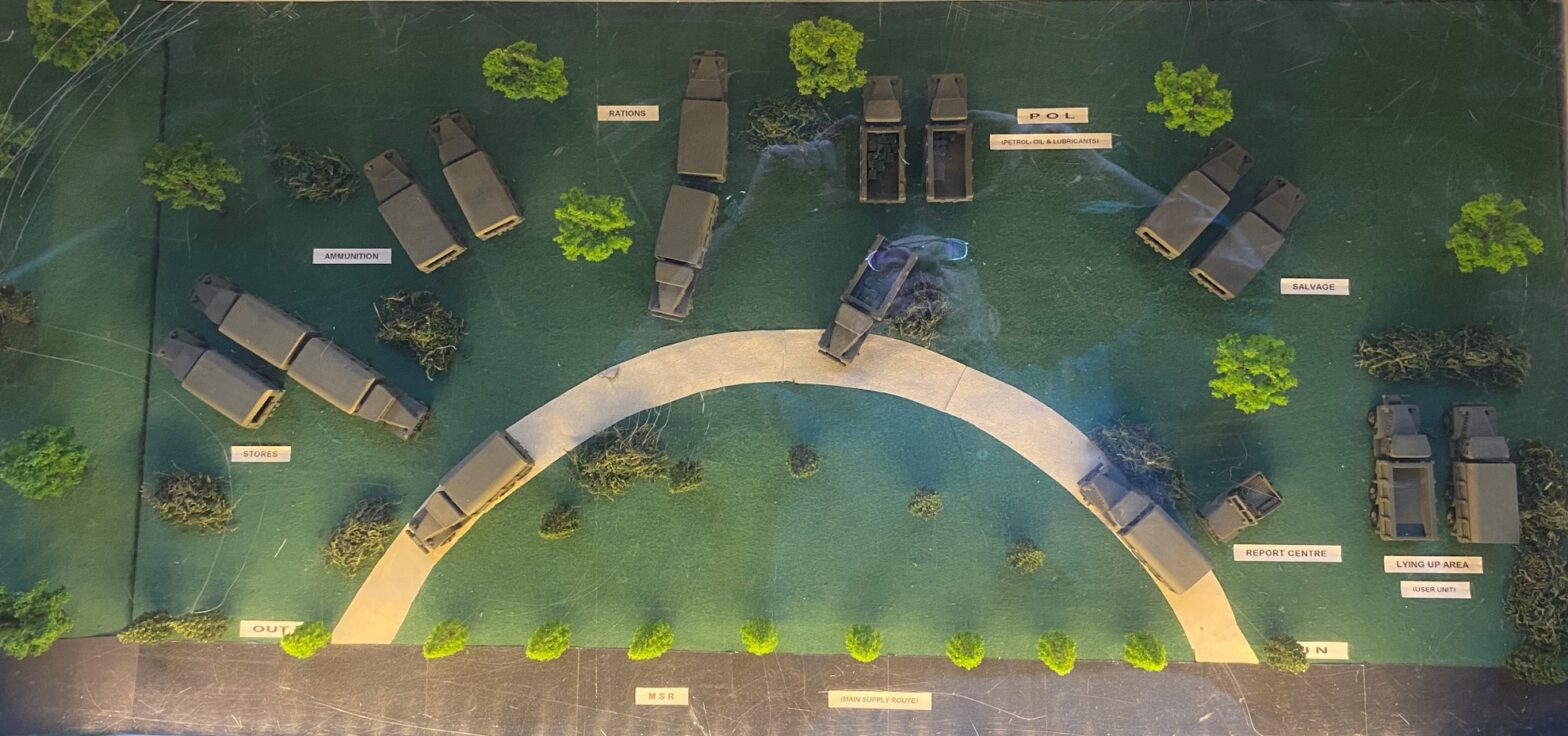
A DP is a point where second line transport (Logistics) delivers supplies and material to a unit first line transport (combat arms). In battle conditions, this may occur at night at a pre-arranged map grid reference and specific time. Commodities are exchanged quickly to avoid presenting a target for the enemy. Generally, the user unit …
Heater, Water, Immersion
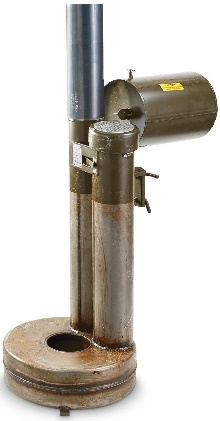
An immersion heater is a fast, economical, and efficient method for heating liquids in tanks, vats, or equipment. Design: This water heater was a US designed petroleum drip-fed system of 1960s vintage based on a 1943 version that could be run in an oil drum/dustbin or similar. The basic design was optimized in 1943 and …