

A forage cap is a small military cap with a visor and a round flat crown to be worn with undress uniforms. The Royal Canadian Electrical and Mechanical Engineers (RCEME) cap badge has changed many times since the Corps’ inception. CF Green service dress forage cap with badge is shown at the left. In May …
Category archives: Museum Artifact
Cap, Forage, Provost

A forage cap is a small military cap with a visor and a round flat crown to be worn with undress uniforms (a uniform worn on other than formal occasions). The Canadian Provost Corps School was formed at Camp Borden, Ontario in the late 1940s, and by 1948 there were at least ten Provost Companies, including five Militia Provost Companies, …
Calculator, Water Contamination
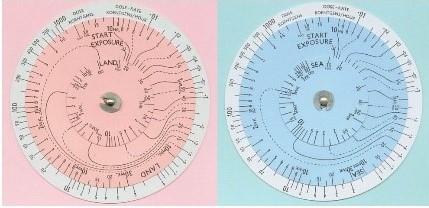
The Radiac Calculator No. 1 6665-110060 (1952-1956) was produced by Blundell Rules Limited of Luton England. If the radioactivity exposure rate (roentgens/hr.) is known at a given time after a nuclear explosion, the calculator predicts the exposure rate at any other time. It also estimates the dose to personnel who are in the area at …
Antidote, Nerve Gas, Auto-Injector

An antidote is a drug that neutralizes the effects of another drug or a poison. Autoinjectors are often used in the military to protect personnel from chemical warfare agents Atropine is the most common drug used to combat nerve gases. The Smithsonian Institution reports both the Egyptians and Greeks used atropine, although it was not until 1901 pure atropine was made …
Bibles
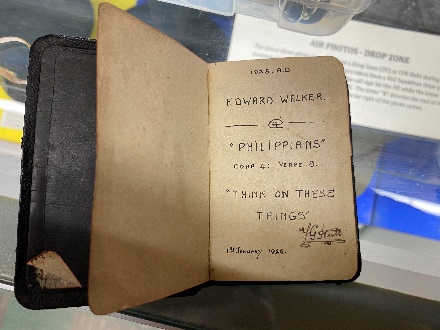
Military Bibles: There were over 40 million Bibles, Testaments and prayer books distributed by the British and Foreign Bible Society in the First World War. Most military Bibles and Testaments are small – the smaller the better, with many printed-on India paper to keep them lightweight and suitable for carrying in pockets and knapsacks. Canadian …
Booklet, “Shoot to Kill”
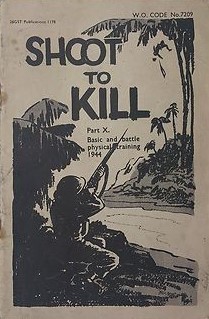
The top photo is a Second World War Army military pamphlet/booklet known as “PART X BASIC & BATTLE PHYSICAL TRAINING “. ‘Shoot to Kill’ had long been a British Army slogan, appearing in numerous training films and pamphlets. In the late 70s and early 80s a new introductory pamphlet on marksmanship– ‘Shoot to Live’–replaced the …
Boots, RCASC
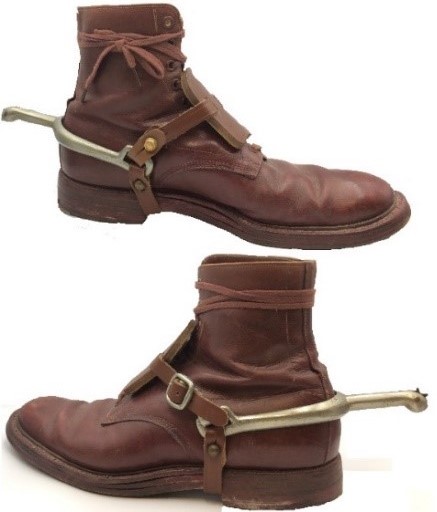
The boots shown (two styles) in the photo are pairs of (First World War / Second World War) brown leather ankle boots worn by officers. Officers wore brown boots or shoes, either privately purchased, or more commonly, obtained from military stores. Brown ankle boots were worn with service dress or battledress. Heavier boots with buckles, sometimes double …
Brass Button Stick
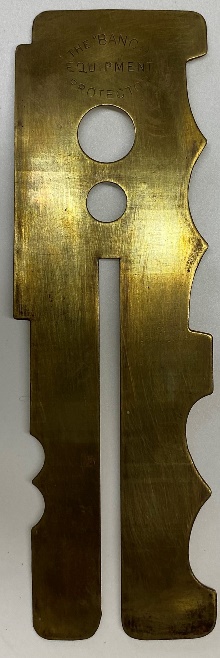
Although ‘stay bright’ (anodized) buttons were introduced to the Canadian Army in the mid-1950s, many units continued to use traditional brass buttons. Button sticks were used to clean them without getting polish on uniforms. The sticks were also useful for cleaning brass hat badges and other polished metal surfaces on kit. Button stick: A strip …
Brush, Clothes
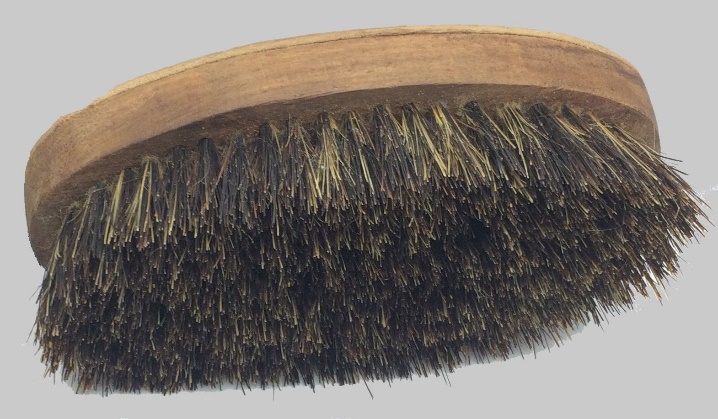
The absence of any residual shoe polish (boot polish) or other leather type dressing suggests this brush may have been used for lint and dust removal from uniforms. This brush type was likely used by an officer or aide to a Commissioned Officer to maintain the appearance of tunics, trousers etc. History: Clothes brushes were …
Clicker
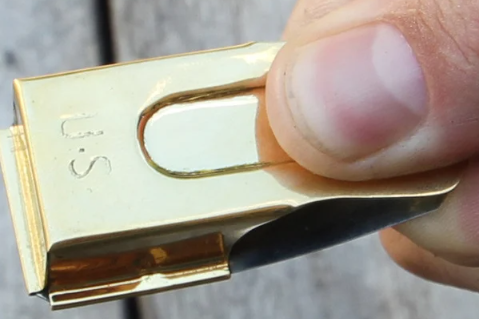
The device, about the size of a person’s thumb, made a metallic clicking sound, and was an essential bit of kit for those landing in Normandy on June 6, 1944, under the cover of darkness. Hollywood actor, John Wayne, helped the clicker become widely known from his dialogue in the 1962 film The Longest Day. …