
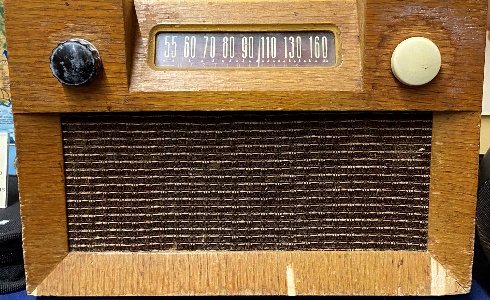
Most families did not own a television until the late 1940’s or early 1950’s. Without a television (or computer or cell phone), our parents, grandparents or great-grandparents often entertained themselves by listening to radio programs. In the 1930’s, almost every household had a radio. The 1930’s was a time known as the”Great Depression” and life …
Author archives: The Service Battalion Senate, Inc.
Lamp, Aldis
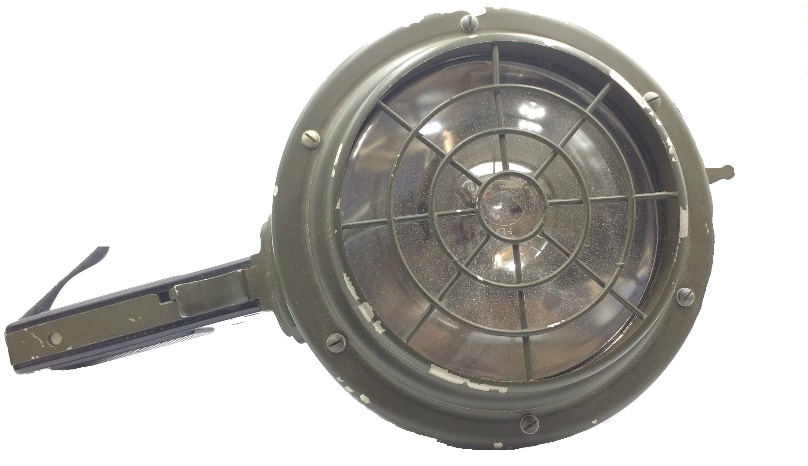
What was an Aldis lamp? The Aldis lamp was named after Arthur Cyril Webb Aldis (1878–1953), who invented a widely used design of signal lamp. An Aldis lamp is a focused lamp that can produce a pulse of light and so can serve as a visual signaling device for optical communication, typically using Morse code. …
Barracks, Carpiquet

The base was renamed Carpiquet Barracks for the French town in Normandy which Canadians liberated during the D-Day invasion. Equipment Depot (ED) No. 2 was first established by the Royal Canadian Air Force (RCAF) in Winnipeg in 1935. The facility also served as a parts hub for Military District No. 10. During the Second World War, and …
Pin, Lapel, 1WW, CEF

Description: This lapel pin is a silver-coloured metal button with a back, horizontal, pin fitting. The outside is a circle with the words FOR HONOURABLE SERVICE; the centre has CANADA on a scroll surmounted by a Tudor Crown with the red inside. The shank shows three maple leaves. Who they were: The Canadian Expeditionary Force (CEF) was …
Key, Telegraph, J-38, 2WW
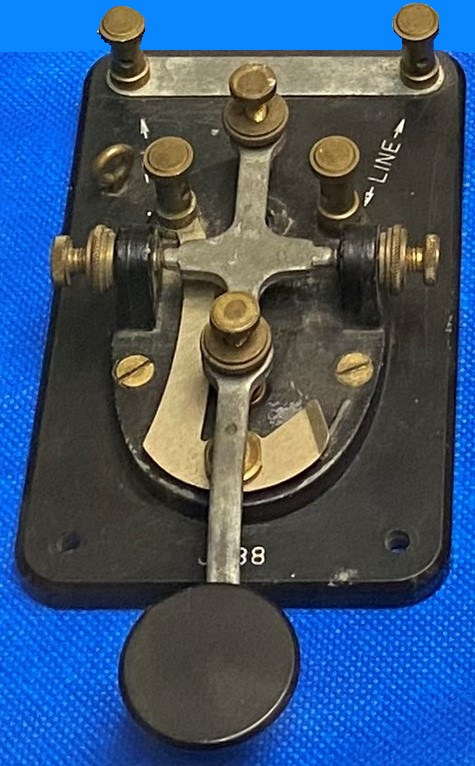
The J-38 was designed to be used with a Signal Corps radio/telegraph operator training set. The strange looking binding posts and shorting strap at the back of the key were used to connect a set of headphones to one side of the key (“tel”) and the other side of the key (“line”) to the training set. Technical Specifications: Power type and voltage: No Power …
Discs, Identification (ID) – First World War

Identification The Canadian soldier had a variety of official methods of Identification; these were necessary for security reasons in addition to identification. ID Discs, sometimes called “dog tags” though this seems to be more of an American term, were the primary means of identifying soldiers who had become casualties. Identification discs were introduced into the …
Continue reading “Discs, Identification (ID) – First World War”
Compass, Liquid-Damped German Army
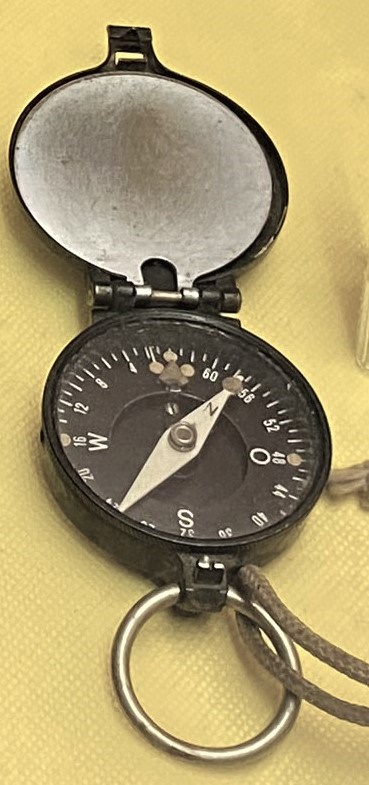
This is a Second World War, German Army Busch, liquid-damped, marching compass manufactured in 1934 or later. Liquid-damped compasses traditionally have a floating compass dial that turns instead of a moving needle supported over a fixed card – but occasionally there are exceptions. Fluid acts to damp (a buffer, absorbing shock) for the horizontal circular oscillation of …
Box, Christmas Gift, Princess Mary
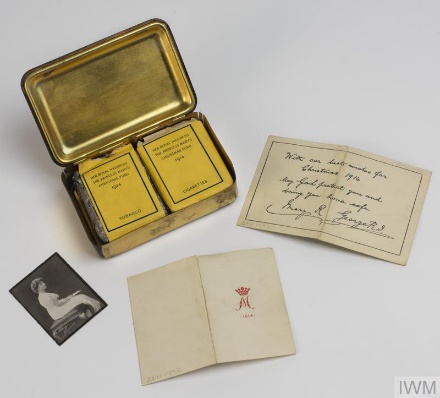
This box was a brass or silver tin containing gifts intended to be distributed to all members of the armed forces of the British Empire on Christmas day 1914 during the First World War. In October 1914, George V’s 17-year-old daughter, Mary, Princess Royal, launched an appeal to fund every member of the armed forces receiving a Christmas gift. Each tin was …
Bottle, Water, British, P–1937
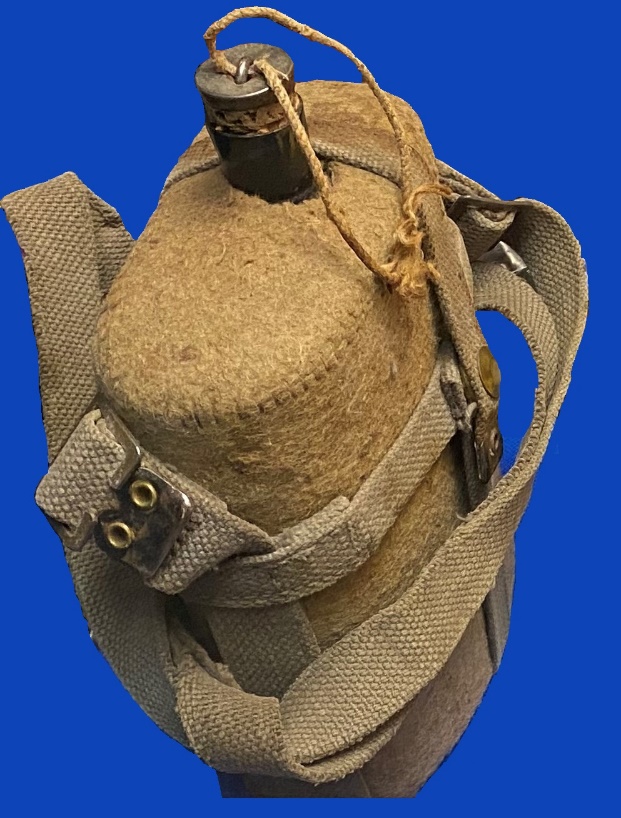
Description: Water bottles of the 1937 pattern with felt cover and webbing were modeled off the pattern 1908 – painted green and adapted for the P-37 webbing system. The MK VII water bottle was the standard water bottle issued to all soldiers and used by the British and Canadian Armies. Green metal water bottle khaki woolen material Cork top …
Blade, Hacksaw

Hacksaw blades are primarily used for metal cutting and are made to varying degrees of hardness, matching the intended application. The primary classifications of hacksaw blades are hard blades and flexible blades. Escape and Evasion Hacksaw Blade This is a scarce escape and evasion hacksaw blade in a moulded rubber sleeve. The rubber sleeve is to protect the …