
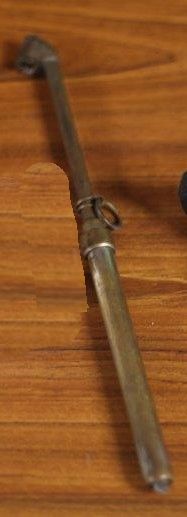
Tire flats happen. Nails, screws and other sharp objects puncture tires. Since Scottish inventor John Dunlop invented the pneumatic rubber tire (air-filled) in 1888, people have been repairing them. Before the tubeless tire (a rubber tire designed for use without an inner tube), people patched the inner tube, removed the offending item from the tire …
Author archives: The Service Battalion Senate, Inc.
Tool, Remover, Frost Shield

When temperatures drop to or below freezing temperature, military vehicles are no different than a family car. Vehicle windows form a layer of ice on the inside from freezing condensation preventing one from driving. The area where frost shields used to be installed kept the windows clear. Car shields were plastic rectangles with a raised …
Rounds, Ammunition
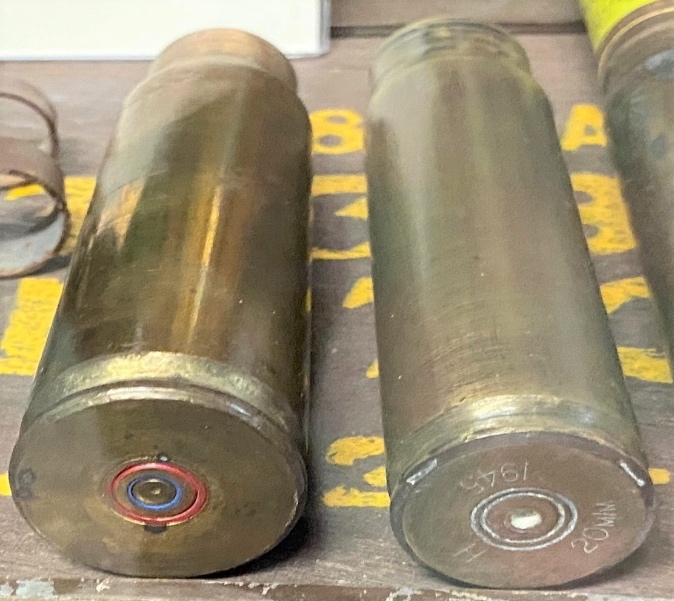
The 20 mm calibre shell is a specific size of popular autocannon ammunition. It is typically used to distinguish smaller-calibre weapons, commonly called “guns”, from larger-calibre weapons such as “cannons” (e.g. a machine gun vs. an autocannon). All 20 mm cartridges have an outside projectile (bullet) diameter and barrel bore diameter of 0.787 inches (20.0 mm). Weapons using this calibre range from anti-materiel rifles and anti-tank rifles to aircraft autocannons and anti-aircraft guns. They …
Stamp, Commemorative, Royal Canadian Ordnance Corps, Diamond Jubilee

The Royal Canadian Ordnance Corps (RCOC) Diamond Jubilee (1903-1963) stamps celebrate 60 years of the Canadian Ordnance Corps (COC). Stamps on the left are in the CSS Museum. The Royal Canadian Ordnance Corps (RCOC) was an administrative corps of the Canadian Army. The RCOC traces its roots back to the Canadian Stores Department. Formed in 1871, the Canadian Stores Department …
Continue reading “Stamp, Commemorative, Royal Canadian Ordnance Corps, Diamond Jubilee”
Projector, Infantry, Anti-Tank (PIAT)

The Projector, Infantry, Anti-Tank (PIAT) Mk I was a British man-portable, anti-tank weapon developed during the Second World War. The PIAT was designed in 1942 to respond to the British Army’s need for a more effective infantry anti-tank weapon and entered service in 1943. The PIAT was based on the spigot mortar system (see below), and projected (launched) a 2.5 pound (1.1 kg) shaped charge bomb …
Manuals, Driver
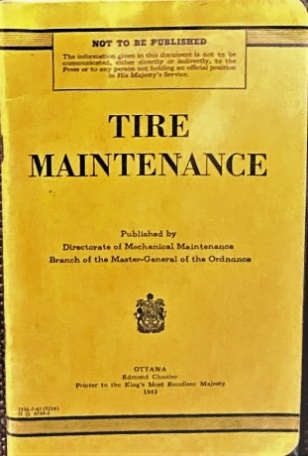
Tire Maintenance 1942. During the second world war, rationing was a large part of life on the home front. Tires were the first items to be rationed. To ensure enough rubber for military and vital civilian purposes, rationing of tires and rubber goods was started on January 5, 1942. The program ran through December 31, …
License, Driver

The Department of National Defence (DND) 404 driver’s license, issued on behalf of the DND, is a legal driver’s licence under the Canadian Driver’s License Agreement. The licence permits DND employees, Canadian Armed Forces (CAF) members and other approved and qualified drivers to operate specific DND vehicles. It is not necessary to have a civilian drivers’ …
Lamps, Carbide
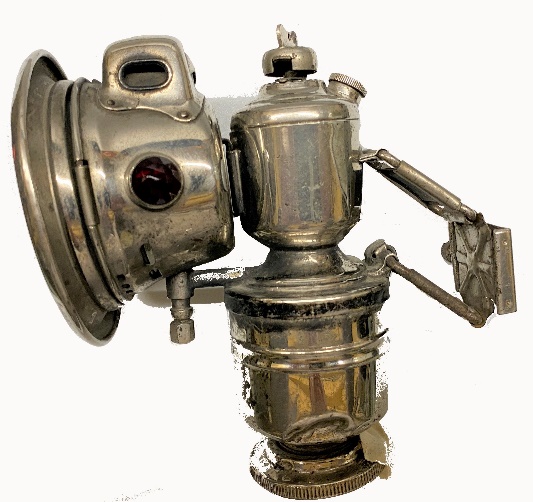
Carbide lamps became widely used by the 1920s. They were used for automobiles, lighthouses and even bicycles, but were most popular among miners because of the quality of light provided and because acetylene gas produced a fair amount of heat from a relatively small flame. Carbide lamps, or acetylene gas lamps, are simple lamps that produce and …
Gun, .50 Calibre, Browning

The Browning .50 calibre machine gun was, like the Browning .30, first used by Canadians in the Second World War as a vehicle mounted weapon, though it was not nearly as common in Canadian service as it was in American service. It was not used in a dismounted (“infantry”) role until after the Korean War, …
Extinguisher, Fire
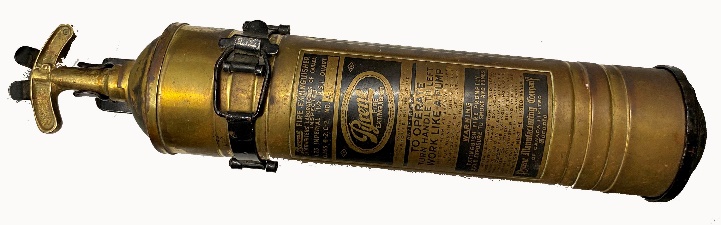
In 1910, The Pyrene Manufacturing Company of Delaware filed a patent to use carbon tetrachloride (a liquid in fire extinguishers) to extinguish fires. The liquid vaporized and extinguished flames by inhibiting the chemical chain reaction of the combustion process (it was an early 20th-century assumption that the fire suppression ability of carbon tetrachloride relied on oxygen removal). …