

An ammunition box or cartridge box is a container designed for safe transport and storage of ammunition. It is typically made of metal or wood and labelled with calibre, quantity, and manufacturing date or lot number. A rubber gasket is common in the hinged lid to protect the ammunition from moisture damage. The resealing ammunition box is largely a NATO tradition. Warsaw Pact nations typically stored and …
Category archives: Museum Artifact
Book, History, United in Effort

This is the first local history to study the integral role of logistics and training support in military operations with a specific focus on Manitoba service support units domestically and overseas. Part 1 traces the evolution of rudimentary to sophisticated logistics operations up to 1965 including the critical role of Camp Hughes, Manitoba in training …
Uniform, Battle Dress
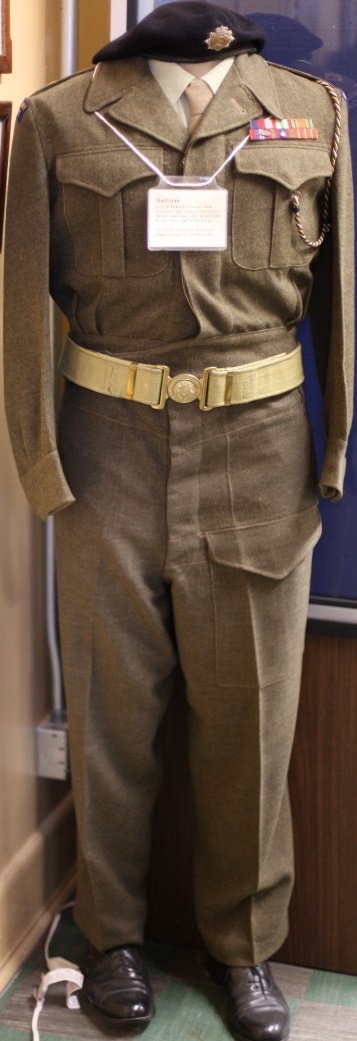
The standard uniform for all ranks of the Canadian Army including during the Second World War was Serge Battledress. Adopted by the British in 1937 and by Canada in 1939, (until the 1960’s) it was worn on parades, in the field as combat dress, and off duty as a “walking out” dress. Canadian and British …
Uniform, Dress Work
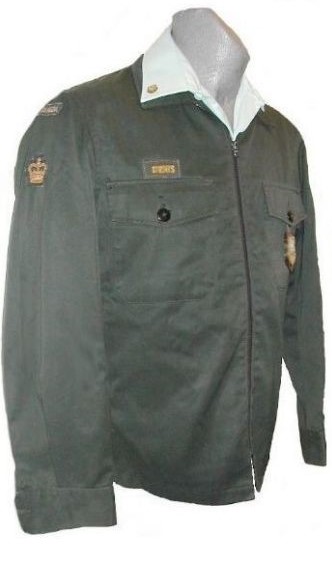
For everyday work wear, in environments or occasions where the CF greens would not be appropriate, personnel were issued the Work Dress uniform. This consisted of rifle-green work trousers; a zippered rifle-green work jacket; a “lagoon green” work shirt; and beret. The jacket collar was worn open. The shirt was either worn with a tie, …
Uniform, Tunic, Officer, with Sam Browne Belt
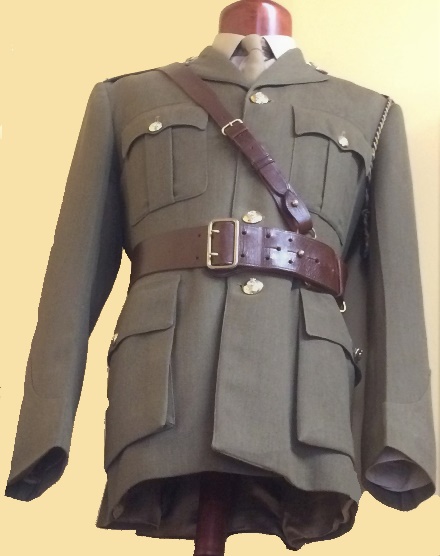
Sam Browne belts are a combination of a pistol belt or garrison belt and a shoulder strap. The Sam Browne belt was named after General Sir Samuel J. Browne, 1824-1901, of the British Army in India. The strap was intended to help carry the weight of a heavy pistol. The Sam Browne belt was phased …
Continue reading “Uniform, Tunic, Officer, with Sam Browne Belt”
Uniform, Patrol Dress
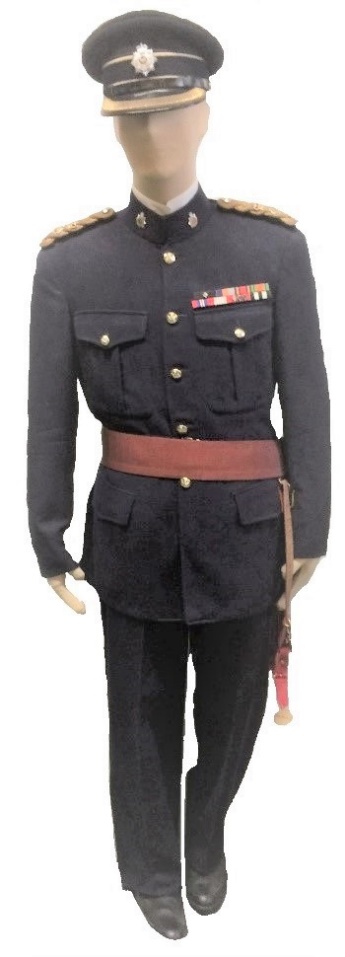
By the mid-1950s, the Canadian army began to move away from its drab, utilitarian, wartime look. An important part of this official movement was to introduce the Blue Patrol uniform. Blue patrol dress was approved for all Officers, Warrant Officers and NCOs above the rank of Lance Sergeant. (A corporal could be appointed lance-sergeant to …
Uniform, Mess kit, 1968
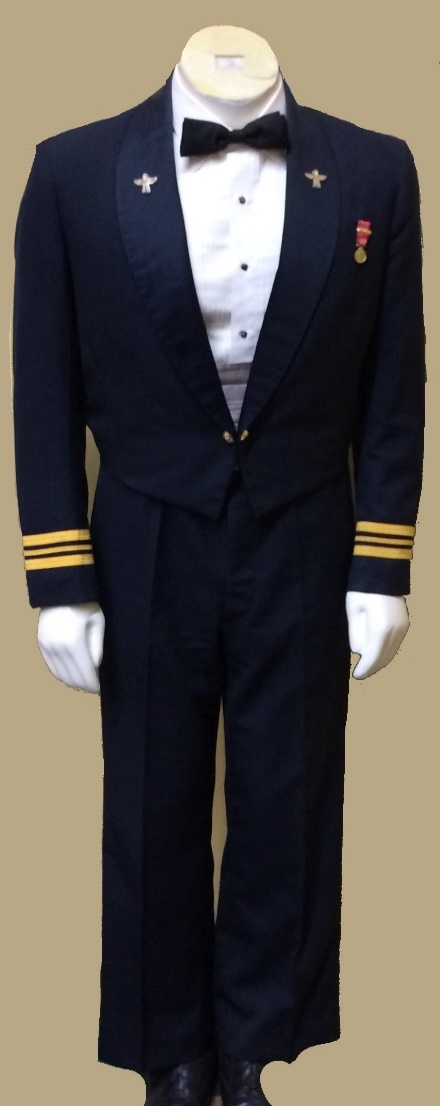
Mess dress uniform (after unification 1968) is the most formal (or semi-formal, depending on the country) type of uniform used by military personnel, police personnel, and other uniformed services members. It frequently consists of a mess jacket, trousers, white dress shirt, cummerbund and a black bow tie, along with orders and medals insignia. Design may depend on regiment or service branch, (e.g. army, navy, air force). In Western dress codes, mess dress uniform is the supplementary alternative equivalent …
Uniform, Mess Kit
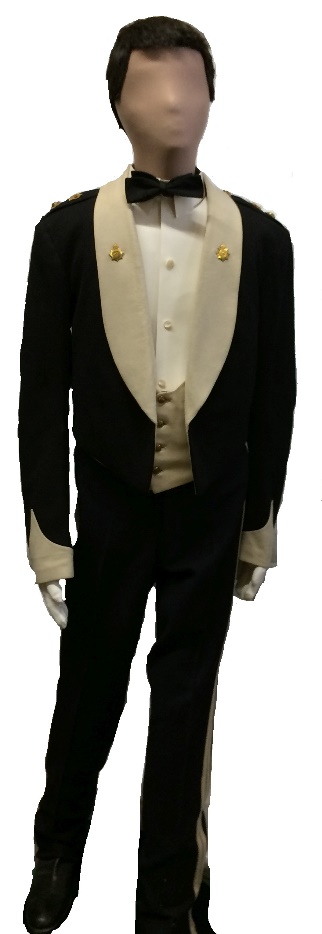
As Falconer’s dictionary defined it in 1815, “Mess implies any company of the officers or solders, who eat, drink and associate together.” In 1845, the British military introduced evening dress intended for formal occasions held in mess halls and elsewhere. Canada assumed full responsibility for its own defence in 1868 and continued to follow most British military …
Uniform Dress Garrison
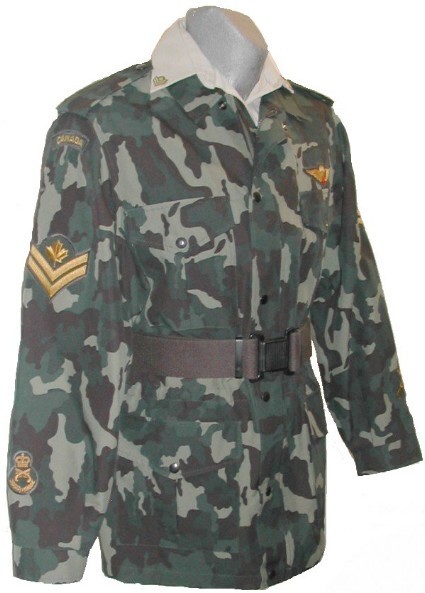
Work dress was replaced with Garrison Dress, which consisted of the old-style work dress pants, a disruptive-pattern jacket, a black web belt, a short-sleeve summer service dress shirt with the collar open and over the jacket collar, high paratrooper-style garrison boots, and a rifle-green crew-neck combat sweater. Adopted in 1989, Garrison Dress was not worn …
Uniforms, Distinctive Environmental (DEU)
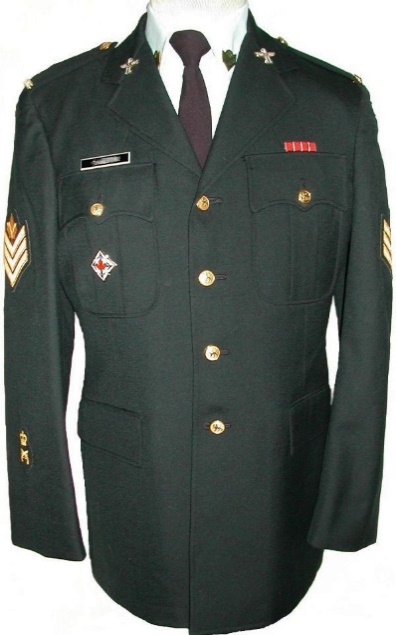
The Canadian Forces Green uniform lasted in service about 15 years and was replaced by “Distinctive Environment Uniforms” (DEU) in 1985. The Distinctive Environmental Uniform was adopted as a dress and duty uniform by the Canadian Forces, marking a return to distinctive service uniforms. The Army retained the basic CF Green service dress (left top) …
Continue reading “Uniforms, Distinctive Environmental (DEU)”