
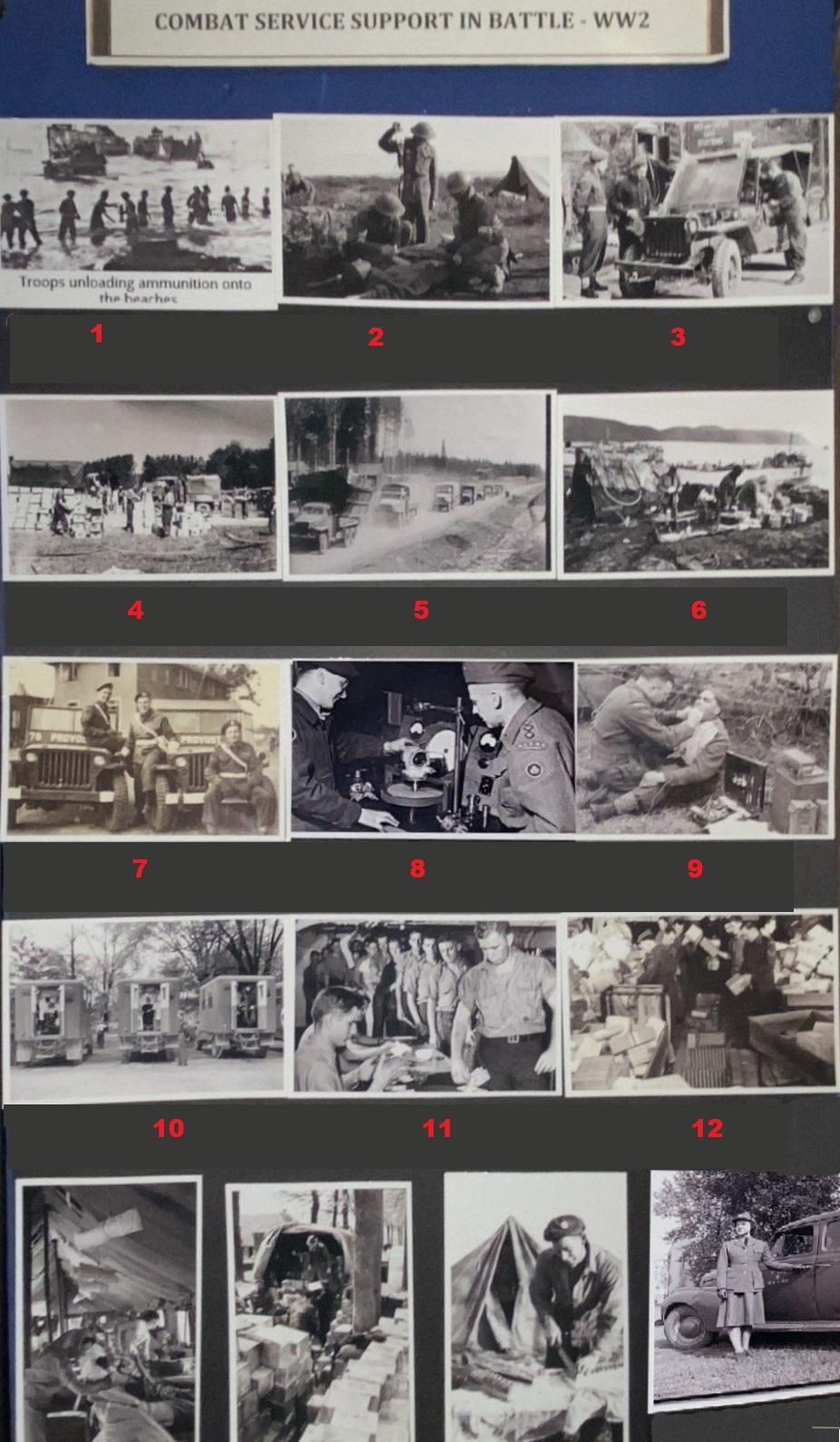
Pictures top left – right, top -bottom
Author archives: The Service Battalion Senate, Inc.
CWAC Rank and Badges

The Canadian Women’s Army Corps (CWAC) was formed in August 1941 as an auxiliary to the army. On 13 March 1942, it became a Corps of the Active Militia. In the photo are examples of: 1. Sergeant rank 2. Corporal rank 3. Lance Corporal rank 4. Warrant Officer 5. Trades Woman Group 3 (Canadian Women’s …
Atomic and Chemical Defense Booklets
![Low level Radiation [NBCW Case]](https://servicebattalion.ca/wp-content/uploads/Low-level-Radiation-NBCW-Case.jpeg?x55353)
Radiation, Low-Level (LLR) Some examples include (LLR): radioactively contaminated protective shoe covers and clothing; cleaning rags; mops, filters, and reactor water treatment residues; equipment and tools; medical tubes, swabs, and hypodermic syringes. LOW LEVEL RADIATION (LLR) PROCEDURES for Canadian Forces Personnel on Deployed Operations Drills, Atomic, Biological and Chemical Defence Defence drills procedures and training …
Trophy, Provost Marshall
![Provost Marshals Trophy in 1964 and 1980 [Provost Case] 2](https://servicebattalion.ca/wp-content/uploads/Provost-Marshals-Trophy-in-1964-and-1980-Provost-Case-2.jpeg?x55353)
The 13 Provost Company won the Provost Marshall trophy in 1964. Its successor unit won the trophy in 1980 and 1982. The trophy was awarded to the most efficient/effective militia Military Police unit in Canada based on garrison and field criteria. 15 Military Police Platoon, 1980 Offr Commanding, Maj Nils Lindberg, CD 15 Military Police …
Combat Service Support in Battle

This group of pictures represents Combat Service Support in Battle in the First World War. Pictures represent: (L-R,) From top to bottom
Stick, Button, First World War

A button stick is a strip of metal or wood slotted to allow a row of military tunic buttons to appear through the slit so the buttons may be polished without soiling the uniform cloth.This button stick example was found in England. It is from the Canadian Expeditionary Force, 27th (City of Winnipeg) Battalion.
Cap, CWAC

This is a Canadian Women’s Army Corps (CWAC) winter cap with a CWAC hat badge attached, 1955. It has a brown leather adjustable chinstrap attached by two small brown plastic buttons, each with the maple leaf emblem and the title, ‘Canada’ to the uppermost portion. Inside the cap features a drop-down serge panel, intended to …
Belt, Garrison

A Royal Canadian Electrical Mechanical Engineers (RCEME) Garrison Belt The garrison belt, also known as a ‘fair leather belt’, was a piece of enlisted kit that was introduced around the First World War. Its formal design meant it would often be seen in parade or barrack settings and styled with dress uniform. However, soldiers sometimes chose …
Culinary Cooks Clothing

The clothing style, including cap, neckerchief, shirt, trousers and clogs (shoes) were worn by Culinary instructors at the Food Services school at CFB Borden in Ontario. The apron would not necessarily have been part of the uniform and whites would be garrison clothing. (A garrison is a body of troops stationed in a particular location,) …
Web Belts and History
![Web Belt & History [Maintenance Cabinet]](https://servicebattalion.ca/wp-content/uploads/Web-Belt-History-Maintenance-Cabinet_image_7.jpeg?x55353)
Canadian Provost Corps (Military Police) The Canadian Provost Corps was created in 1940 as a corps of the Canadian Army. In Sep 1939, acting on a recommendation from the Commissioner of the Royal Canadian Mounted Police (RCMP), the Minister of Justice granted authority to form a “Provost” company from RCMP volunteers. No. 1 Provost Company …